
Stay Safe: Driving Tips for Florida Rain
You are cruising down I-95 at 4:00 PM when the horizon suddenly turns a bruised shade of purple. Within seconds, the vehicle in front of you vanishes behind a wall of grey water, leaving you driving blind in fast-moving traffic. This is the Florida “white-out,” a common yet terrifying scenario where tropical intensity overwhelms standard wipers and visibility drops to zero instantly.
Most commuters believe their general experience is enough to handle a shower, but regional data suggests otherwise. Florida driving safety presents unique challenges because the initial deluge mixes with accumulated asphalt oils, creating a surface as slick as ice. According to safety experts, the most critical moments occur right at the start of a storm, often catching confident drivers off guard before they can adjust their speed or spacing.
Moving from anxiety to control requires understanding exactly how to protect yourself when you drive in the rainy Florida climate. This guide covers vehicle readiness, specific legal requirements, and the physics of maintaining traction on wet roads. True preparation for driving in rain begins long before the clouds break, ensuring you can handle the sudden shift from sunshine to storm without panic.
Why Your Tires Are Your First Line of Defense: The ‘Penny Test’ and the Impact of Tropical Heat
Most drivers worry about skidding on wet pavement, but the real damage to your vehicle often happens when the road is bone dry. Florida’s intense sun heats asphalt to blistering temperatures that literally bake the elasticity out of your rubber. This heat-induced degradation turns flexible, grippy tires into hard, brittle plastic that can’t grab the road effectively. Just like replacing windshield wipers regularly ensures visibility, inspecting your tires for dry rot and hardness is essential for maintaining control. When searching for the best tires for Florida rainy season, look for compounds specifically designed to resist this thermal breakdown.
Once the afternoon downpour hits, your tires need deep grooves to do their job. Think of the tread as a plumbing system; its primary function is to channel water out from under the wheel so the rubber can touch the pavement. If the tread is worn shallow, the water has nowhere to go, causing the tire to ride on top of the liquid rather than the road. Checking tire tread depth for tropical weather is the only way to ensure your car can displace enough water to prevent hydroplaning during a heavy storm.
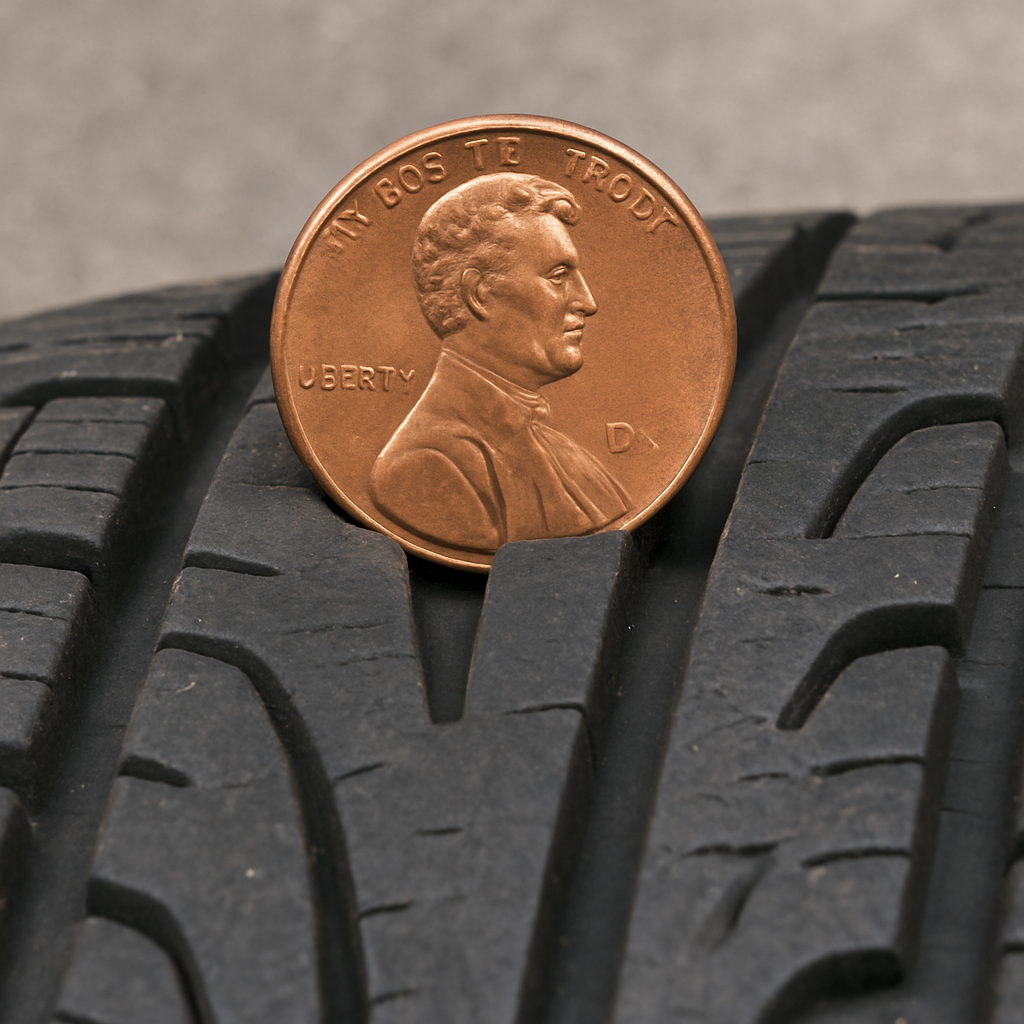
You don’t need to visit a mechanic to know if you are safe. The “Penny Test” is a reliable, free way to gauge if your tread is deep enough to handle standing water:
- Take a standard U.S. penny and hold Lincoln’s body between your thumb and forefinger.
- Place Lincoln’s head downward into the deepest groove of your tire tread.
- If the top of his head disappears into the groove, your tread is still viable. If you can see his entire head, the tire cannot displace water effectively and needs immediate replacement.
The 15-Minute Danger Window: Why the Start of a Storm is Slicker Than the Middle
Many drivers assume the road gets progressively more dangerous as water accumulates, but the highest risk often occurs before the puddles even form. During Florida’s hot dry spells, vehicles deposit oil, exhaust residue, and transmission fluid onto the asphalt, where it settles into the surface. When rain finally arrives, water displaces these lighter fluids, lifting them to the top to create a slick, greasy film. For a short time, you aren’t driving on asphalt, but on a lubricant that feels deceptively slippery.
This “oil lift” effect is most potent during the first 15 minutes of a shower, requiring immediate adjustments behind the wheel. Because tires cannot grip this oily mixture effectively, braking distances increase dramatically. This is the moment to establish a safe following distance on wet pavement, doubling the gap between you and the car ahead to account for reduced traction. Recognizing this specific hazard is one of the most overlooked florida rainy driving safety tips.
Eventually, the sustained intensity of the downpour works in your favor by scrubbing the pavement clean. Once the heavy rain washes the oil into the drainage ditches, traction actually improves, leaving you to deal with the water volume rather than a greasy surface. However, just as your tires regain their grip, visibility usually drops to zero, requiring a strict adherence to state lighting laws to ensure you don’t disappear in the spray.
Lights On, Hazards Off: Navigating Florida’s Strict Laws for Rainy Visibility
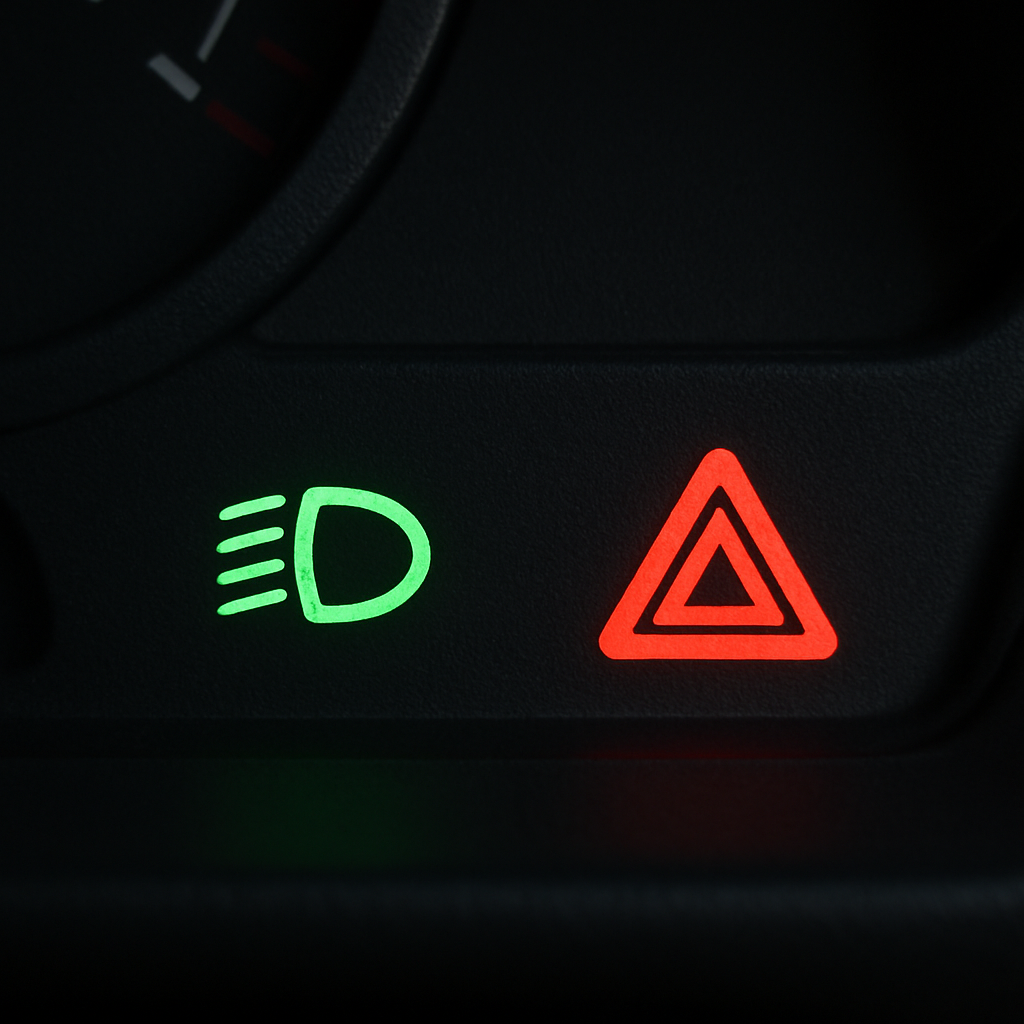
Sudden white-out conditions often trigger a panic reflex to flip on your emergency flashers, but this instinct creates more danger than safety. When visibility drops, your goal is to communicate clearly with the drivers around you, yet flashing hazard lights effectively scramble that signal. In traffic psychology, flashing ambers are the universal sign for a disabled or stopped vehicle; using them while moving at highway speeds sends a conflicting message that causes trailing drivers to slam on their brakes unnecessarily.
Beyond the confusion, engaging your flashers physically overrides your car’s ability to signal turns or lane changes. Because of this, Florida law on hazard lights while driving in rain generally restricts their use to stopped vehicles to prevent chain-reaction crashes. If you keep the hazards off, your brake lights can function properly, allowing trailing drivers to see exactly when you are slowing down rather than guessing amidst the blinking rhythm.
Your primary defense against invisibility is actually a different switch entirely: your low-beam headlights. State regulations dictate when to turn on headlights in rain Florida: specifically, any time your windshield wipers are in use. Relying on automatic Daytime Running Lights (DRLs) is a critical mistake because they often leave your taillights completely dark, making you nearly impossible to see from the rear. Manually turning on your low beams activates the red tail lights, ensuring you don’t vanish in the spray.
Proper lighting ensures other commuters see you, but it doesn’t guarantee your tires will hold their grip. Once you have maximized your presence using these visibility tips, your next challenge is managing the terrifying sensation of your vehicle detaching from the pavement entirely.
When Your Car Starts to ‘Float’: How to Master Hydroplaning Recovery Without Panicking
Even the best hydroplaning prevention techniques can fail during a Florida cloudburst, and the first warning sign isn’t visual—it’s tactile. You will likely feel the steering wheel become unsettlingly “light” or unresponsive, as if the mechanical connection between your hands and the road has been severed. This sensation occurs because your tires are no longer gripping the pavement; instead, they are riding on top of a “water wedge.” This thin layer of fluid builds up under the front tires faster than the treads can channel it away, effectively lifting the rubber and turning your vehicle into an unguided water ski.
Mastering how to recover from a car skid on wet roads requires fighting your strongest survival instinct: the urge to slam on the brakes. Hard braking while floating on water shifts the vehicle’s weight abruptly, which often causes the car to spin violently out of its lane. The safest reaction is actually to do as little as possible. Immediately lift your foot off the accelerator and allow the car to coast. By removing the forward thrust, you allow the vehicle’s weight to naturally push the water wedge aside, letting the tires sink back down and reconnect with the asphalt without the sudden jolt that comes from panic braking.
While distinguishing between hydroplaning and skidding is technical, the correction for both focuses on gentle, deliberate steering. If you are hydroplaning straight, hold the wheel steady; if the back of your car begins to fishtail, calmly steer in the direction you want to go rather than fighting the slide. Once you feel the distinct “thump” or vibration of the tires grabbing the road again, you have successfully recovered. This delicate balance of physics is why automated systems often struggle in the rain, making it essential to understand why you must disable convenient features like cruise control the moment the windshield gets wet.
Trust Your ABS, Kill Your Cruise Control: How to Manage Speed and Stopping on Wet Asphalt
Relying on automation during a downpour is one of the most common mistakes drivers make on the Turnpike. While cruise control is excellent for dry, long stretches, it becomes a liability the moment moisture hits the road. When your tires lose traction on a wet surface, the system mistakenly interprets the wheel spin as a drop in speed and responds by applying more power to the engine. This sudden burst of acceleration while you are already struggling for grip can instantly throw the vehicle into an uncontrollable spin, illustrating the severe dangers of using cruise control in heavy storms.
Stopping safely on slick asphalt requires ignoring old advice you might have learned decades ago. Modern vehicles are equipped with Anti-lock Braking Systems (ABS), which are designed to pump the brakes hundreds of times per second—far faster than a human foot ever could. If you need to stop suddenly, you will likely feel the brake pedal vibrate, pulse, or kick back against your foot. This sensation can be startling, but it means the system is working exactly as intended to prevent wheel lockup. Proper braking techniques for anti-lock systems in wet weather are simple: press the pedal firmly and hold it down, effectively “steering through the brake” rather than pumping it.
Because wet roads significantly reduce friction, your car needs much more room to come to a complete halt. The Florida Department of Highway Safety wet weather guidelines recommend doubling your typical following distance to account for this slide risk. To ensure your vehicle responds correctly when seconds count, keep this emergency checklist in mind:
- Disengage Cruise Control: Turn it off manually at the first drop of rain.
- Stomp and Stay: Apply constant pressure to the brake pedal during an emergency stop; do not release even if it shudders.
- Look to Safety: Focus your eyes on the open gap you want to drive into, not the obstacle you are avoiding.
Once you have mastered speed and stopping, the next threat comes from below, as even moderate showers can hide deep puddles capable of destroying your engine.
Avoiding the ‘Engine-Killer’: Why You Should Never Drive Through Standing Water
That shimmering pool of water spanning the intersection might look passable, but it is often a trap waiting to total your vehicle. Drivers frequently misjudge depth because stagnant water conceals missing manhole covers or debris, making avoiding flooded streets and standing water essential for protecting your investment. The cost of guessing wrong is almost always a destroyed car, not just a wet carpet.
Modern vehicles breathe through air intakes that are often positioned surprisingly low to the ground, acting like a vacuum cleaner for the road surface. If you drive through a deep puddle and that intake sucks in even a small cup of fluid, the engine suffers a catastrophic failure known as hydrolock. Because pistons are designed to compress air but cannot compress liquid, the sudden resistance bends metal rods and shatters internal components instantly.
Physics poses a second threat in the form of buoyancy, which can turn your heavy SUV into a helpless boat. It takes only six inches of water to reach the bottom of most passenger cars and cause stalling, while two feet of rushing water provides enough lift to carry away trucks and large vehicles. Once your tires lose contact with the asphalt, steering and braking become useless, leaving you at the mercy of the current.
Your best defense when driving safely through a tropical depression is to treat any obscuration of the road markings as a “do not enter” sign. If you cannot gauge the depth or see the pavement, assume it is deep enough to ruin your engine. When the downpour is so heavy that you cannot spot these hazards in time, you face a new decision: getting off the road completely.
The ‘Pull Over’ Protocol: Making the Right Call When Visibility Hits Zero
Even the best drivers reach a limit where technology cannot beat the weather. When your wipers are slapping frantically at maximum speed but the windshield remains an opaque sheet of grey, you have officially entered a “white-out” condition. This is the moment to prioritize safety over punctuality. If you cannot see the taillights of the car ahead or the painted lines on the road, you are essentially driving blind, and looking for visibility tips during Florida afternoon thunderstorms won’t help as much as getting off the road immediately.
Instinct often screams to slam on the brakes and retreat to the highway shoulder, but this is statistically one of the most dangerous places to be during low visibility. Other drivers, struggling to see the lanes, subconsciously focus on the brightest lights available—often the taillights of the car in front of them. If you stop on the shoulder, a disoriented driver may mistake you for moving traffic and follow you right off the road, resulting in a severe rear-end collision. This phenomenon makes selecting the right sanctuary critical for survival.
Knowing where to stop is just as important as knowing when. You need to identify a “Safe Haven” that physically separates you from the flow of confused traffic:
- Gold Standard: A gas station or commercial parking lot. These offer full separation from the road and overhead lighting.
- Silver Standard: A designated rest area or exit ramp. These areas have lower speed limits and dedicated space for stopping.
- Last Resort: The far edge of the grass shoulder. If you must stop here, pull off the pavement completely to ensure no part of your car is in the lane.
Once you have secured a spot, your lighting strategy changes based on your location. If you are forced to use the shoulder as a last resort, turn your hazard lights on immediately to signal that you are a stationary obstacle. However, if you are safely in a parking lot, turn your lights off so others do not follow you in blindly. Mastering this distinction is vital for protecting yourself and your vehicle. With your vehicle parked and the storm raging outside, you can now take a breath and review the final steps to ensure you and your car are ready for the next trip.
Your Florida Rain Survival Checklist: Arriving Safe Every Time
You no longer need to grip the steering wheel with white knuckles every time the Florida sky turns gray. By understanding the critical role of tire tread depth and fresh wiper blades, you have shifted from reacting to the weather to actively preparing for it. You now know that florida driving safety relies on visibility, which means using your headlights correctly and keeping your hazard lights off while moving so other drivers can predict your actions. This preparation turns a chaotic commute into a manageable situation where you remain the calmest person on the road.
Beyond maintenance, your technique has evolved to handle the specific physics of driving in rain. You understand why cruise control is dangerous on wet pavement and how to trust your car’s ABS system rather than pumping the brakes during a stop. Instead of fearing the “floaty” sensation of hydroplaning, you now possess the focus to ease off the gas and steer through it without panic. This knowledge empowers you to make split-second decisions based on facts rather than fear, ensuring you stay in control even when the roads are at their slickest.
Before your next trip, internalize these five essential florida rainy driving safety tips to guarantee your readiness: check your tire wear and wiper quality, turn on your headlights while keeping hazard lights off, disengage cruise control, and significantly increase your following distance. These steps serve as your personal safety protocol against the elements. Remember, the ultimate measure of success isn’t beating the GPS arrival time, but arriving home safely. You are now the capable driver who navigates the storm while others merely weather it.
Do You Have Questions Regarding Your Insurance Needs?
Call us and let our knowledgeable team of award-winning insurance agents help. We provide a wide range of affordable insurance solutions for people from all walks of life. Whether you are seeking insurance for your home, auto, business, life, or health, our team of licensed insurance agents will help you find the best coverage for your specific needs at the best possible rates.