
Frequently Asked Questions For Auto Insurance
We’ve all stood in the kitchen, staring at a renewal notice and wondering why the price suddenly jumped. It often feels like you need a law degree just to decipher the paperwork and figure out where your money is actually going.
Stripping away the confusion starts with looking at the contract itself, legally known as the policy. This document dictates exactly what protection you receive in exchange for your premium, which is simply the monthly or annual cost you pay to keep the agreement active.
Many drivers assume they have “Full Coverage,” yet industry experts warn that this is often just a marketing term rather than a guaranteed safety net. Because every driver’s commute and budget differs, treating coverage as one-size-fits-all usually results in overpaying for unnecessary add-ons or missing critical help during an accident.
These auto insurance FAQ’s cut through the noise to help you balance affordable payments with real security. By decoding
Minimum Requirements vs. Real-World Protection: How Much Liability Do I Actually Need?
Most drivers assume that if they meet the minimum liability insurance requirements by state, they are fully protected. Unfortunately, these legal minimums are often just a starting point to get you legally on the road, not a financial safety net for a serious crash. Liability coverage pays for the damage you cause to others—their medical bills and their vehicle repairs—but state limits are frequently too low to cover a modern accident. If you total someone’s new SUV and your property damage limit is only $10,000, you are personally responsible for paying the remaining balance.
You will typically see coverage limits written as a series of three numbers, such as 25/50/25. It can look like a locker combination, but interpreting this split is vital when asking, “how much car insurance coverage do I need?“
Types of Auto insurance coverage
- Bodily Injury (Per Person): The maximum amount your insurer pays for one person’s medical bills in an accident you cause.
- Bodily Injury (Total): The total pot of money available for everyone injured in that single accident combined.
- Property Damage: The limit for repairing the other driver’s car or property, such as a fence or guardrail.
Financial experts often suggest aiming for “100/300/100” limits to safeguard your future earnings and assets, like a home, from lawsuits. While carrying higher limits increases your monthly premium slightly, it costs significantly less than a court judgment after a major wreck.
Collision vs. Comprehensive: Which One Protects Your Car from ‘Acts of God’?
Many drivers ask for “full coverage” expecting a single policy that handles everything, but this is actually a marketing term for bundling liability with two distinct protections: collision and comprehensive. Collision coverage pays to fix your vehicle if you hit a pothole, a telephone pole, or another car, regardless of who is at fault. This is the specific component that repairs your own bumper or fender after a crash, ensuring you aren’t left without a vehicle while still making loan payments.
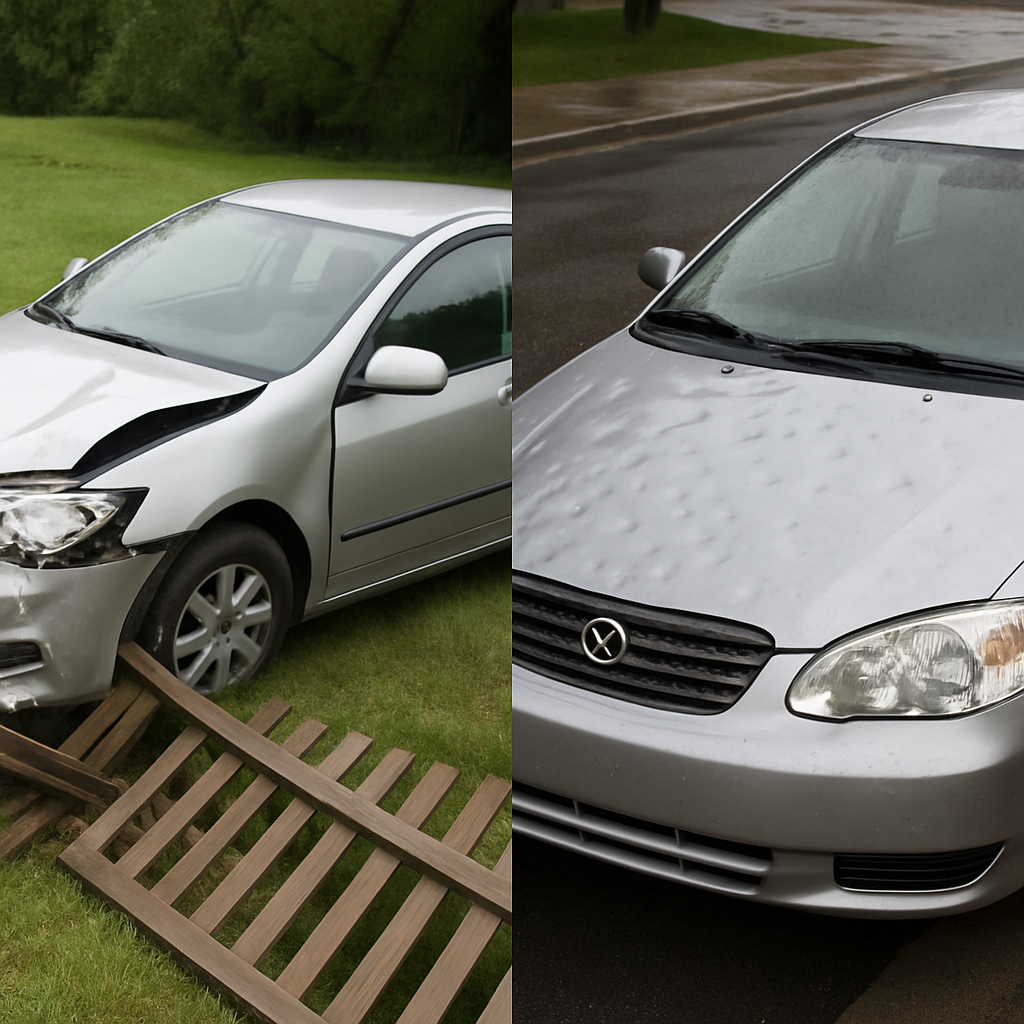
While collision handles active driving accidents, comprehensive insurance steps in when your car is damaged by bad luck or nature. This covers non-collision events often called “acts of God,” including fire, theft, hail damage, falling tree branches, or even striking a deer. To distinguish the difference between collision and comprehensive coverage, ask yourself a simple question: did I drive into something, or did something happen to my car while it was parked or legally driving?
Deciding between full coverage vs liability only often comes down to the current market value of your vehicle. Financial experts frequently recommend the “10% Rule” to determine if these optional add-ons are worth the cost. If the annual price of collision and comprehensive exceeds 10% of your car’s replacement value, it may be time to drop them to save money. There is little financial sense in paying huge premiums to protect an older car, as the insurer will simply declare it a total loss and write a small check if the repair costs outweigh the vehicle’s worth.
Why Did My Rate Just Go Up? Uncovering the Hidden Factors That Dictate Your Premium
Opening a renewal notice to find a higher price tag is a universal frustration, especially if you haven’t filed a claim recently. Insurers calculate your premium (your monthly or annual payment) based on a complex profile of risk, using data points that go far beyond your personal history behind the wheel. Your physical address plays a massive role; simply moving across town can trigger a rate change because companies analyze accident frequency, weather risks, and theft rates in specific zip codes. Consequently, when you search for “auto insurance near me,” the quotes you receive are heavily influenced by local traffic density and neighborhood crime statistics.
Beyond where you live, your financial history often carries surprising weight through a metric called a “credit-based insurance score.” Most carriers use this to predict the likelihood of a future loss. Statistical data suggests that drivers with stable credit histories tend to file fewer claims, leading insurers to offer them lower rates. This means that paying down a credit card balance could effectively lower your car insurance bill, even if your driving skills haven’t changed.
While some elements are out of your control, tracking the specific variables insurers use allows you to spot potential savings. Common factors that affect auto insurance rates include:
- Driving History: The impact of driving record on insurance premiums is substantial; accidents or tickets signal high risk.
- Location: Urban areas with higher vandalism or collision rates cost more than rural zones.
- Credit History: In most states, a higher credit-based score correlates with a lower premium.
- Vehicle Type: Cars that are expensive to repair or frequently stolen carry higher rates.
- Age and Experience: Newer drivers generally pay more due to lack of experience.
Knowing these variables helps explain the cost, but adjusting your deductible is the most direct way to manually lower that final number.
High Deductible or High Premium? Choosing the Right Financial Balance for Your Budget
Adjusting your deductible is the most direct lever you can pull to lower your monthly costs immediately. Think of the deductible as your financial share of a repair bill before the insurer pays the rest. There is a strict seesaw relationship at play here: agreeing to pay more out-of-pocket during an accident (a higher deductible) drastically reduces what you pay every month. This trade-off defines Auto insurance deductibles and premiums, allowing you to customize a policy that fits your specific cash flow needs.
Before you commit to the highest possible deductible to slash your bill, however, you must be realistic about your emergency savings. A lower monthly payment is only helpful if you actually have the cash on hand to cover that $1,000 or $1,500 expense if a crash occurs. If raising your deductible saves you $200 a year, but leaves you unable to repair your vehicle after a minor accident because you lack the funds, that is not truly affordable auto insurance. A smart rule of thumb is to never set a deductible higher than the amount sitting in your bank account right now.
To find your sweet spot, ask your agent for a “what-if” quote comparing $500 and $1,000 deductibles to see if the monthly savings justify the increased risk. Once you have balanced your budget against your coverage, you will be better prepared for the moment the rubber actually meets the road and you need to use your policy.
From Fender Bender to Payout: How to File a Claim Without the Stress
Paying your premium is routine, but filing a claim is the moment that protection actually kicks in. A claim is simply your formal request to the insurance company to pay for damages based on the terms of your policy. While the adrenaline of a crash can make clear thinking difficult, following a strict process ensures you aren’t left footing the bill for a wreck that wasn’t your fault.
Success starts before you even leave the roadside. Gather as much objective evidence as possible to support how to file a car insurance claim after an accident:
- Photos: Capture close-ups of damage to all vehicles, license plates, and wide shots of the street to show traffic signs or weather conditions.
- Information Exchange: Swap names, insurance policy numbers, and contact details with the other driver immediately.
- Official Report: Call the police to file a report, which serves as an unbiased record of the event.
Once you report the incident, a Claims Adjuster—a specialist whose job is to investigate the damage and determine coverage—will be assigned to your case. They will review your photos, interview witnesses, and assess repair estimates to approve the payout. Be aware that most policies require you to report accidents “promptly,” often within 24 to 72 hours, so do not wait to make the call.
Even with a solid report, disputes can happen. Never admit fault at the scene, as this can serve as immediate grounds for rejection. If you are unsure what to do if your car insurance claim is denied, request the specific reasoning in writing and provide counter-evidence, such as dashcam footage. Sometimes, however, the payout is approved but simply isn’t enough to cover your remaining car loan, a specific financial danger that requires a different kind of protection.
Beyond the Basics: Do You Really Need Gap Insurance or Non-Owner Policies?
New cars lose value the moment they leave the lot, creating a dangerous financial window known as “negative equity.” If your vehicle is totaled, standard policies only pay its current market value, which might be thousands of dollars less than what you still owe the bank. This specific financial trap is exactly what gap insurance is designed to fix; it covers the difference so you aren’t stuck making monthly payments on a car that no longer exists.
Not everyone needs this extra protection, but it is vital for specific financial situations. Consider adding Gap coverage if you fit this profile:
- Small Down Payment: You paid less than 20% upfront at the dealership.
- Long Terms: Your loan spans 60 months or longer, meaning you build equity very slowly.
- Fast Depreciation: You drive a brand that loses value quickly or you rack up high mileage.
Situations where you don’t own the car require different strategies. Many drivers wonder, “does car insurance cover rental vehicles?” Typically, yes—your personal comprehensive and collision coverage extends to rentals, allowing you to skip the expensive damage waiver at the counter. Conversely, if you frequently borrow cars or want to maintain continuous coverage between vehicles to keep future rates low, a non-owner car insurance policy explained by an agent can provide liability protection without a vehicle attached. Once you have the right mix of standard and specialized coverage, the final step is ensuring you aren’t overpaying for it.

Stop Overpaying: How to Lower Your Monthly Costs and Switch Companies Seamlessly
Loyalty doesn’t always pay off in the insurance world; actively reviewing your policy for discounts is often the most effective strategy to reduce your bill. Many drivers unknowingly miss out on significant savings simply because they haven’t updated their profile with their agent. While increasing your deductible—the amount you pay out-of-pocket before coverage kicks in—is a quick fix, there are smarter ways to lower monthly car insurance costs without sacrificing protection.
Modern technology and lifestyle choices offer several “hidden” avenues for savings that go beyond a clean driving record. Before renewing, check if you qualify for these common price breaks:
- Bundling: Purchasing your auto and home or renters policies from the same company typically yields the largest discount.
- Telematics: Allowing an insurer to track your driving habits (like braking and speed) via a mobile app can trade some privacy for a discount of up to 15-30%.
- Safety Features: Anti-theft devices, daytime running lights, and anti-lock brakes often lower the cost of comprehensive coverage.
If your current provider cannot offer competitive rates despite these adjustments, it might be time to look elsewhere. Switching car insurance companies is straightforward, but timing is critical. You must secure the new policy before canceling the old one to avoid a “coverage gap,” which can lead to legal fines and higher future premiums. Whether you choose a major national brand or a local auto insurance agent who understands your specific neighborhood risks, ensure the start date of your new plan overlaps with the end date of your old one by at least one day.
Your Insurance Roadmap: 3 Steps to Ensure You’re Fully Covered Today
Understanding your policy transforms that monthly premium from a frustrating expense into a strategic financial tool. Instead of dreading your renewal notice, you now possess the knowledge to spot coverage gaps and identify where you might be overpaying. This shift allows you to approach affordable auto insurance not just as a mandatory budget item, but as a customized shield for your vehicle and your bank account.
Put this new confidence to work by scheduling a fifteen-minute policy review every year to ensure your coverage matches your current life situation. Take a moment today to verify you have a digital copy of your ID card saved on your phone, saving you from frantically digging through the glovebox later. With the answers to these FAQ’s related to auto insurance in your back pocket, you are ready to call your agent and ask the tough questions that ensure you aren’t leaving protection on the table.
True success is the peace of mind that comes from knowing exactly what happens if disaster strikes. By applying these car insurance tips, even minor perks like the benefits of roadside assistance become clear assets rather than hidden details. Drive with certainty knowing that your policy is no longer a confusing contract, but a promise you fully understand.
Do You Have Questions Regarding Your Insurance Needs?
Call us and let our knowledgeable team of award-winning insurance agents help. We provide a wide range of affordable insurance solutions for people from all walks of life. Whether you are seeking insurance for your home, auto, business, life, or health, our team of licensed insurance agents will help you find the best coverage for your specific needs at the best possible rates.